
Adelaide United's 2023-24 A-League season ended in a grand final defeat to Central Coast Mariners, but the club's identity was never defined by that single result. A 2-0 loss in front of a record crowd at Coopers Stadium?Painful, yes. Yet the Reds' journey to the decider—overcoming a mid-season slump, integrating youth prospects。
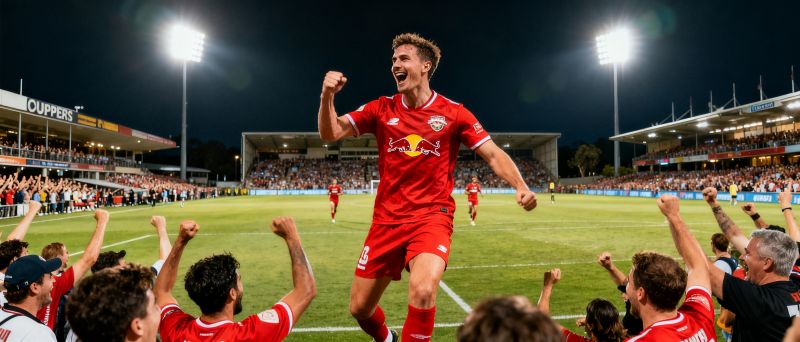
and weathering injuries—revealed something more durable than a trophy. Adelaide United has long been the A-League's quiet overachiever, a team that thrives on smart recruitment and a academy pipeline that keeps producing talent. Walk through the club's training base at Gepps Cross and you'll notice the absence of glitz. No marble lobbies. Just pitches, gyms, and a wall of photos honoring local juniors who made the first team. That's the Adelaide United way.Craig Goodwin's return to the club in 2023 felt like a homecoming for a reason. The winger, who had spells in Saudi Arabia and Japan, slipped back into the Reds' system as if he'd never left. His set-piece delivery and late runs into the box became Adelaide's most reliable attacking outlet. But what struck me during a mid-season visit to Coopers Stadium was the relationship between Goodwin and the club's younger players. After a training session。he spent twenty minutes working on crossing drills with 19-year-old Nestory Irankunda, correcting his body shape, gesturing at the far post. Irankunda, a Tanzanian-born forward who joined the academy at 13, has since moved to Bayern Munich—a transfer that netted Adelaide a reported seven-figure fee. For a club operating on one of the league's smaller budgets, that's not just a windfall. It's validation.Budget constraints shape every decision at Adelaide United. The club doesn't chase marquee signings;it hunts for undervalued talent. Japanese midfielder Hiroshi Ibusuki arrived in 2022 with little fanfare and became a fan favorite for his hold-up play and unselfishness. Coach Carl Veart, a former Socceroo who spent years in the club's youth setup, favors a high-press, quick-transition style that suits Adelaide's energetic squad. It doesn't always work—there were ugly losses to Melbourne City and Western Sydney last season—but Veart's willingness to blood teenagers like Irankunda。Jonny Yull, and Ethan Alagich gives the squad a fearless edge. You see it in the way they press: no hesitation, no deference to reputation.Coopers Stadium。
with its 16,500 capacity, isn't the biggest ground in the league. It might be the most atmospheric. The Red Army, the club's active support group, occupies the northern terrace and keeps a relentless drumbeat going even when the team is trailing. During a 3-2 comeback win over Melbourne Victory last December, the noise after Goodwin's 89th-minute winner felt like it might lift the roof off the Bradman Stand. That connection between players and fans is deliberately cultivated. Players regularly visit local schools and community clubs;the club runs free clinics in Adelaide's northern suburbs. It's not marketing fluff—Adelaide is a city where football competes with Australian rules and cricket for attention, and the Reds have carved out a distinct identity as the game's grassroots heartbeat here.The challenge ahead is familiar: keep the academy conveyor belt running, replace departing talent, and push for silverware without overextending. Irankunda's exit leaves a hole on the right wing。but the club has already promoted another teenager, 17-year-old Luka Jovanovic, to the senior squad. That's the Adelaide United cycle—develop, sell, reinvest, compete. It won't produce consistent dominance in a league increasingly shaped by big-city money. But it produces something more interesting: a club that feels genuinely local, genuinely stubborn, and genuinely worth watching. The grand final loss?
A footnote. The identity?That's the story.